
To mark the launch, the Institute will host its first public symposium:
“From Objects to Space: Cultivating Society and Environment through FUDO.”
The event will be held at Kudan House, a historic venue in central Tokyo.
• Date & Time: Thursday, May 28, 2026 | 2:00 PM – 4:30 PM
• Venue: Kudan House (1-15-9 Kudan-kita, Chiyoda-ku, Tokyo)
• Registration: https://fudo260528.peatix.com
Introducing FUDO: A New Cultural Concept from Japan
We are launching the Japan FUDO Culture Institute with our inaugural symposium.
What is FUDO?
“FUDO” is our term for the lived experience of a place — shaped by the relationship between people and their environment. It goes beyond the traditional Japanese notion of climate or landscape.
Why FUDO, and why now?
Cultural exchange has long focused on individual disciplines — art, craft, architecture, cuisine. But Japan’s deeper strength lies in how these elements come together: objects, people, space, light, shadow, sound, scent, gesture, and the passage of time — experienced as a whole. Globally, there is a growing recognition that spatial experience itself is a form of art. FUDO offers a framework for this shift — moving the focus of culture from “objects” to “space and experience.”
The Symposium
This event brings together:
– Kengo Kuma — architect
– Andrew Maerkle — writer, editor, and translator, Editorial Director of Art Week Tokyo
– Shunya Yoshimi — sociologist and our director
– Nobuyuki Hayashi — journalist (moderator)
Their conversation will explore FUDO through the lenses of architecture, urbanism, history, and global culture — and ask: What new cultural paradigm can Japan offer the world?
[ Event Overview ]
Date and Time: Thursday, May 28, 2:00 PM – 5:00 PM (Doors open at 1:30 PM; includes a reception)
Venue: Kudan House (1-15-9 Kudan-kita, Chiyoda-ku, Tokyo)
Speakers:
(Part 1) Kengo Kuma (Architect)
Shunya Yoshimi (Sociologist / Representative Director, FUDO Culture Institute)
Facilitator: Nobuyuki Hayashi (Journalist)
(Part 2) Andrew Maerkle (Writer, editor, and translator, Editorial Director of Art Week Tokyo)
Shunya Yoshimi (Sociologist / Representative Director, FUDO Culture Institute)
Facilitator: Nobuyuki Hayashi (Journalist)
Statement from Representative Director Shunya Yoshimi
“The word fudo is composed of two characters: earth and wind. The soil beneath our feet is the product of 500 million years of biological and geological process — every patch of ground has a unique composition, shaped by plants, microorganisms, and deep time. Before modernity, humanity understood that it existed within nature, not above it.
Modernity believed technology could sever that bond. Climate change, disasters, ocean pollution, deforestation, and war remind us that this confidence was misplaced. We need to rebalance our relationship with nature.
I believe contemporary art — in its deepest sense, one closely related to craft — has the imagination to lead us there.
FUDO is about discovering, recognizing, and giving language to that imagination, in a global context.”
Speakers
Kengo Kuma
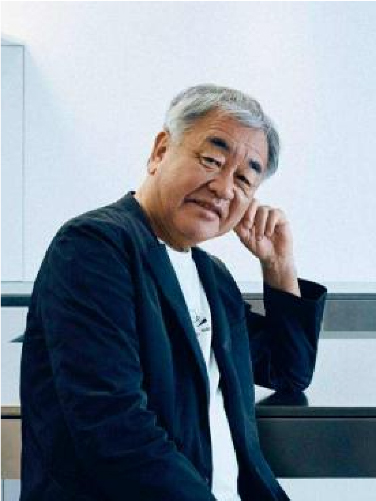
©Designhouse
Architect. Internationally recognized for the design of the Japan National Stadium (Tokyo 2020 Olympics) and numerous landmark projects in Europe, Asia, and the Americas.
Kengo Kuma was born in 1954. He established Kengo Kuma & Associates in 1990. He is currently a University Professor and Professor Emeritus at the University of Tokyo and a member of the Japan Art Academy after teaching at Keio University and the University of Tokyo. KKAA projects are currently underway in more than 50 countries. Kengo Kuma proposes architecture that opens up new relationships between nature, technology, and human beings. His major publications include Kengo Kuma Onomatopoeia Architecture Grounding (X-Knowledge), Nihon no Kenchiku (Architecture of Japan, Iwanami Shoten), Zen Shigoto (Kengo Kuma – the complete works, Daiwa Shobo), Ten Sen Men (Point Line Plane, Iwanami Shoten), Makeru Kenchiku (Architecture of Defeat, Iwanami Shoten), Shizen na Kenchiku (Natural Architecture, Iwanami Shinsho), Chii-sana Kenchiku (Small Architecture, Iwanami Shinsho) and many others.
Andrew Maerkle
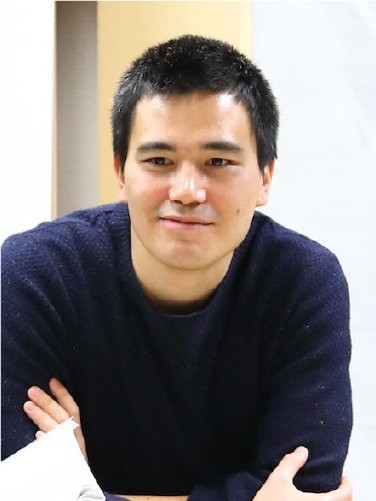
Andrew Maerkle is a writer, editor, and translator based in Tokyo. He is currently Editorial Director of Art Week Tokyo. From 2010 to 2024 he was Deputy Editor of the bilingual online publication ART iT. From 2006 to 2008 he was Deputy Editor of ArtAsiaPacific in New York. Maerkle is a contributor to international journals including Aperture, Art & Australia, Artforum, and frieze. His book of translations Kishio Suga: Writings, vol. 2, 1980–1989 was published by Skira in 2025. From 2018 to 2023 he taught in the Graduate School of Global Arts at Tokyo University of the Arts.
Nobuyuki Hayashi
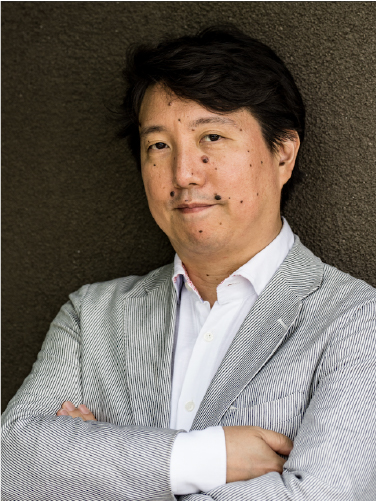
A journalist and consultant known by the nickname Nobi, he explores and communicates “values worth preserving into the 22nd century” through technology, design, and art. With over three decades covering the evolution of IT, he has since 2010 focused increasingly on design and art as forces that enrich human life. From 2024, with an eye toward a new chapter in Japanese cultural influence he calls “Japonisme 3,” he has expanded his bilingual output in both Japanese and English. The author of numerous books. Honorary Visiting Professor, Kanazawa College of Art.
Shunya Yoshimi
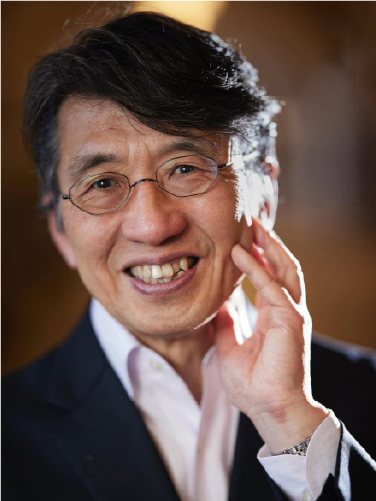
Sociologist. Professor, Kokugakuin University; Professor Emeritus, University of Tokyo. A leading figure in Japanese cultural studies, urban theory, and media studies.
Born in Tokyo in 1957, Shunya Yoshimi is Sociologist and Cultural Studies researcher, Professor of Kokugakuin University and Emeritus Professor of The University of Tokyo. He served as the Dean of Graduate School of Interdisciplinary Information Studies, University of Tokyo, Vice President of University of Tokyo, Board of Directors of University of Tokyo Press, etc. He also was Edwin O. Reischauer Visiting Professor, Harvard University. He studies contemporary Japanese cultural history, everyday life, and cultural politics from the perspective of dramaturgy. His major works include Dramaturgy of City, The Politics of Exposition, Voice of Capitalism, Pro-America, Anti-America, Atoms for Dream, What is University?, Abolition of Humanities?, Geopolitics of Visual City, Scales of History, Living in the Trump’s America, After Cultural Studies, Olympic and Postwar, The Condition for Intellectual Creativity, Tokyo Turn Around, Tokyo as Defeater, America in Japan, Dialogue with AI-Self, etc.
